
Strengthening My Relationship
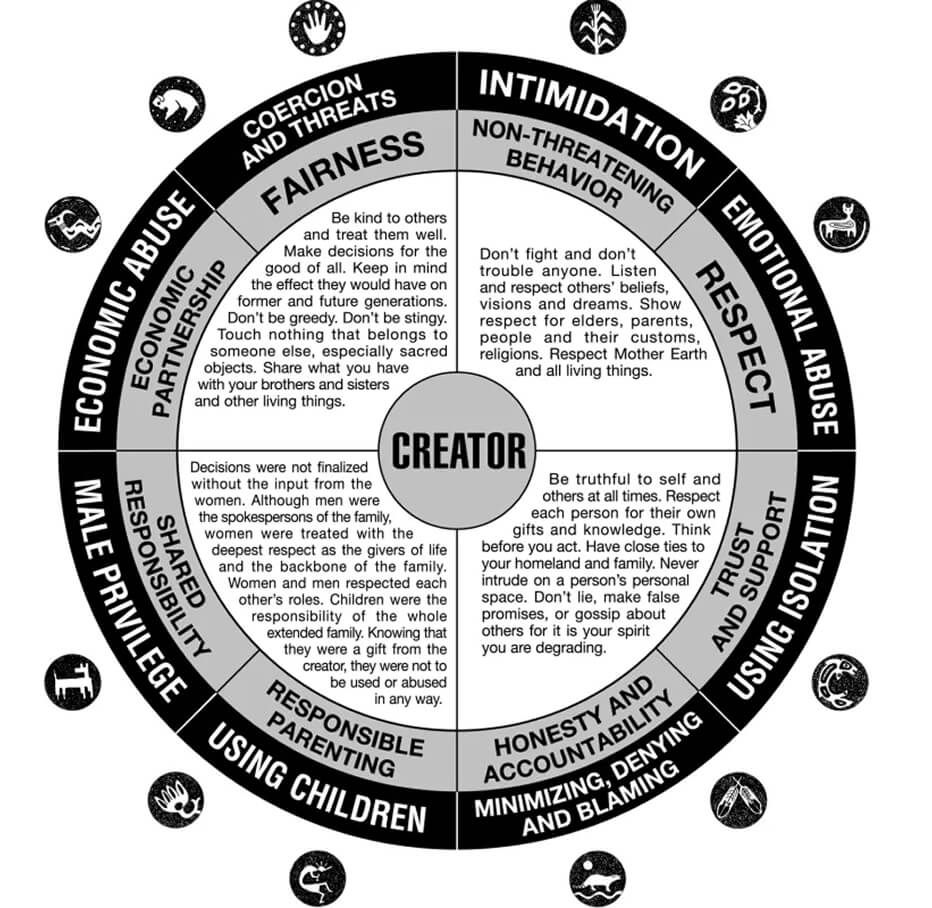
Creator Wheel
New York State Coalition Against Domestic Violence
Resources
National Indigenous Women’s Resource Center
National Indigenous Women’s Resource Center
StrongHearts Native Helpline
National domestic abuse hotline
How do I get out of an unhealthy relationship?
No relationship is perfect. In any relationship, dating or marriage, current or future, you’ll experience ups and downs with your partner.
All relationships exist on a spectrum that ranges from healthy to abusive. Unhealthy relationships land somewhere in the middle. In unhealthy relationships, one person attempts to exert power over another to control them. Abusive relationships take that imbalance even further with one person making all the decisions. The abusive partner may have extreme fits of jealousy, isolate you from your family or friends, or even prevent you from participating in ceremonies and gatherings.

What do you think are the red flags to look out for in a relationship? Can you recognize the signs when a relationship is unhealthy? The 303 Indigenous Productions youth producers offer their thoughts in this video. How would you get out of an unhealthy relationship? Let us know.
Domestic and sexual abuse is a serious issue in Native communities. In fact, on some reservations, women are murdered at a rate 10 times higher than the national average. Native youth have the power to end this epidemic and create a healthier future for themselves and their families.
As the Creator Wheel shown above illustrates, a life with the Creator and traditional spirituality at its center does not support using abuse.
Setting and respecting boundaries is essential to any relationship. If you’re in an unhealthy or abusive relationship, know that the abuse is not your fault and you deserve to be safe. No one deserves to experience abuse.
Here are some tips for breaking up with a partner1:
- Identify your support system–friends, family, elders, etc.—and lean on them when necessary.
- Tell your friends, parents, or a trusted adult that you’ve decided to end your relationship, especially if you think your ex will try to confront you when you’re alone.
- Write down your reasons for ending the relationship, and keep them as a reminder for times when you miss your ex. Give a copy to someone you trust that you consider part of your support system.
- Create a safety plan. This is a plan that’s personalized to your situation and designed to lower your risk of getting hurt when leaving an abusive situation. Creating a safety plan will help you prepare for different scenarios and figure out what places or people feel unsafe to you before you initiate the break up.
- If you don’t feel safe, don’t break up in person. It may feel cowardly or mean, but sometimes the safest way to break up is by phone, text, or DM.
- If you break up in person, always do it in a public place. Make sure you have a friend or your parents wait nearby. Take your phone with you!
Remember that it’s not only okay to ask for help, asking for help is a sign of strength. You can access 24/7 support by calling the StrongHearts Native Helpline at 844-7NATIVE (762-8483). This is a safe, confidential, and anonymous domestic and sexual violence helpline for Native Americans and Alaska Natives.
What’s your reaction?
Your reaction has been submitted
- Breakup Planning Guide, One Love Foundation